
If you are living with spinal stenosis, every step can feel like a challenge. Many people try to stay active to manage their symptoms, but without realizing it, they might be performing movements that actually pinch their nerves further. Knowing which spinal stenosis exercises to avoid is the first step toward reclaiming your mobility and reducing leg pain.
In this guide, I'll break down the 3most common exercise mistakes that people with spinal stenosis make. Then I'll show you 3 alternative exercises to help you stand and walk more comfortably.
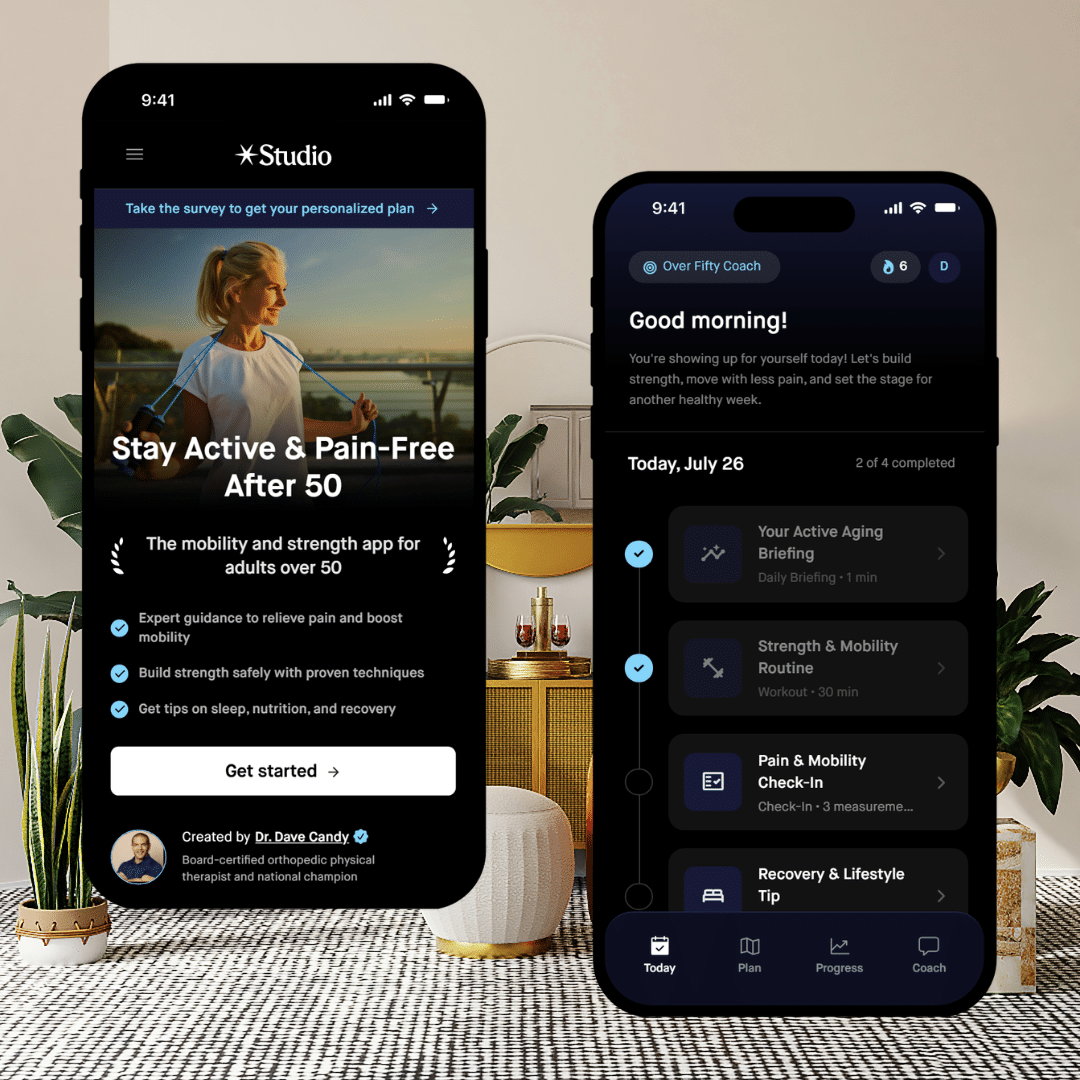
Get Dr. Dave Candy's
Over Fifty Coach app
Why Does Standing and Walking Cause Pain?
To understand why certain movements are harmful, we have to look at spinal mechanics. When you move from sitting to standing, your spine enters extension (backward bending). This motion naturally narrows the spaces where the nerve roots exit your spine.
If you have spinal stenosis, you’ve likely lost some disc height. That backward bend can compress the nerves, leading to the aching, heaviness, or "pins and needles" feeling in your legs. This is why "proper" upright posture often makes the pain worse rather than better.
3 Spinal Stenosis Exercises to Avoid
1. Standing "Tall" and Walking Completely Upright
We are always told to stand up straight with good posture. However, for those with stenosis, standing as tall as possible forces the spine into an arched position that pinches nerve roots. This is often the #1 mistake people make while walking.
- The Fix: Practice a "posterior pelvic tilt." Roll your pelvis underneath you and tighten your abdominals to flatten your lower back.
- Pro Tip: When walking, lean just slightly forward. This subtle "trunk lean" opens up the spinal canal and helps you move more comfortably.
2. Aggressive Hip Flexor Stretches
Tight hip flexors pull your spine into an arch, which increases nerve compression. While stretching them is helpful, the way most people do it—by lunging forward and arching the back—makes it one of the top spinal stenosis exercises to avoid.
- The Fix: Before you push forward into a stretch, tuck your tailbone under and squeeze your glute. You won't go as far, but you will feel a deep stretch in the front of your thigh without the dangerous back arch.
3. High-Arch Glute Bridges
Bridges are fantastic for glute strength, but many people lift their hips too high. When your hips go too high, your lower back arches excessively at the top of the movement, recreating the exact pinching sensation you are trying to avoid.
- The Fix: Flatten your back against the floor first. Lift your hips only as high as you can without allowing your back to arch. It’s a smaller, safer, and more effective movement for your core and glutes.
3 Better Alternatives for Strength and Mobility
Now that you know which movements to modify, here are three "stenosis-friendly" exercises to add to your routine:
1. Weighted Lunges (The Squat Alternative)
Traditional squats with a barbell on your shoulders compress the spine. Lunges are a superior alternative. By working one leg at a time, you get a high-intensity workout with only half the compressive load on your spine. Plus, the staggered stance naturally stretches the hip flexor of the back leg.
2. Single-Leg Romanian Deadlift
This is often called the "Golfer’s Bend." By hinging at the hips on one leg (while holding a wall or chair for balance), you strengthen your hamstrings and glutes. This builds "hinge" strength that protects your back during daily activities like picking objects up off the floor.
3. The Recumbent Bike
Walking is the goal, but if walking is currently too painful to get your heart rate up, use a recumbent bike. The seated, slightly flexed position keeps your spinal canal open, allowing you to improve circulation and oxygen flow to your nerves without the pain of standing extension.

Merach S19 Recumbent Bike on Amazon
Key Takeaways
- Flatten the Back: Use pelvic tilts to avoid the "backward bend" that pinches nerves.
- Lean In: A slight forward lean during walking can significantly increase your pain-free distance.
- Choose Single-Leg: Lunges and single-leg deadlifts provide strength with less spinal compression.
- Improve Circulation: Use a recumbent bike to get the blood flow your nerves need to heal.
Need More Help For Spinal Stenosis?
If you'd like more help to relieve back pain or sciatica from spinal stenosis, check out my book: The Over 50 Sciatica Solution.

Inside, you'll find:
- Clear explanations of sciatica for people over 50
- A do-it-yourself assessment to better understand your symptoms
- Natural relief strategies beyond just exercises